Angkor Wat tickets
On reaching Angkor Wat, I was asked for the ticket by the security guard. However I did not see any ticket counter. The guard told me I could book it online on https://www.angkorenterprise.org/ which is exactly what I did. Beware of the many fake websites selling Angkor tickets. I would recommend to take a 3 day pass which costs 62USD as one day is not enough to properly see even the major temples. The complete temple site spans around 30 sq kms, an approximate idea based on google maps. The actual driving distance between the temples which I covered on my mountain bike will be elaborated further in following sections.
1 day pass costs 37USD
3 days pass costs 62USD using which you can visit the temple site any 3 days in following 10 days
7 days pass costs 72USD which can be used any 7 days in the next one month
Major temples one should visit besides Angkor – Bayon Temple and Ta Phrom
Upon asking the hostel reception, it dawned on me that there are numerous other temples as part of Angkor Heritage Site. There are two types of temple tours sold in the city – Smaller circle tour (covering Angkor, Bayon and Ta Phrom) and the Bigger circle tour covering few other temples and not these three. These tours are priced at 15USD and 20USD respectively.
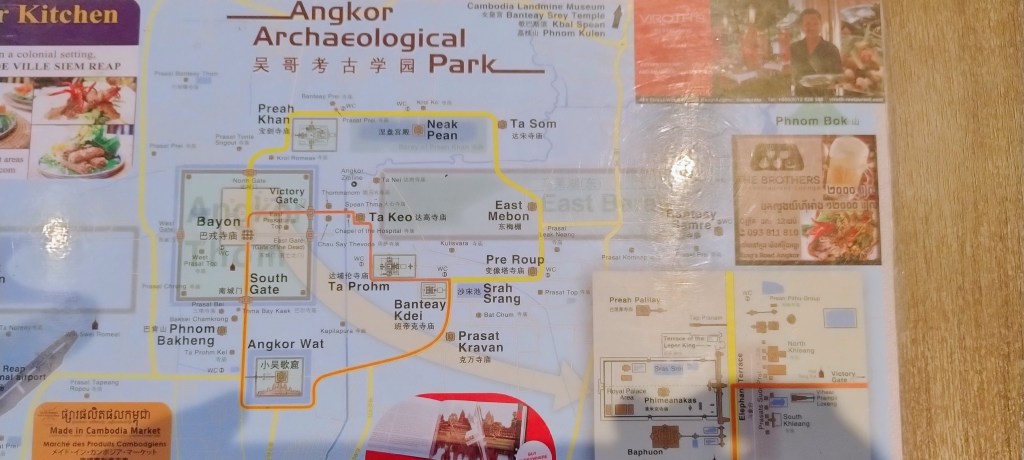
Bayon and Ta Phrom constitute the major three temples along with Angkor Wat as part of Angkor Heritage Site.
Travel options – group tour vs DIY
The sunrise tour departs at 420 in the morning to catch the sunrise at Angkor. As it is east facing, visiting it as sunrise could be a sight to behold. This trip costs 15USD and includes transportation and an English speaking guide.
DIY
One can rent a motor bike for 10-12USD OR a mountain bike for 5USD. I rented a mountain bike because it would get the job done and it would be a bit of workout on the side. Angkor Wat is 7kms away from Lub D which I found to be manageable. However, the second day of mountain bike drive to Bayon and Ta Phrom exploded out of hand. More on that after Ta Phrom section.
Angkor Wat – 8th wonder of the world
Built in 1150, Angkor is arguably the biggest religious structure of the world. It is part of the UNESCO world heritage site and spans 163 hectares in area.
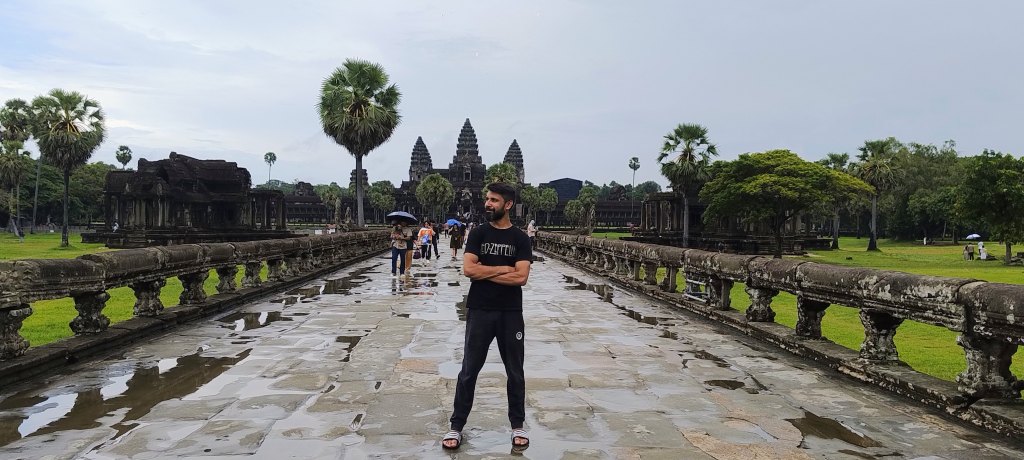
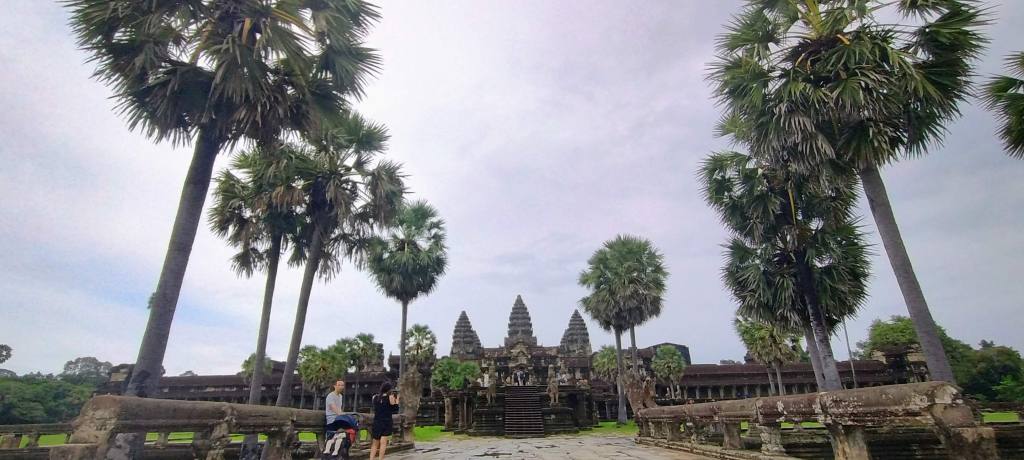
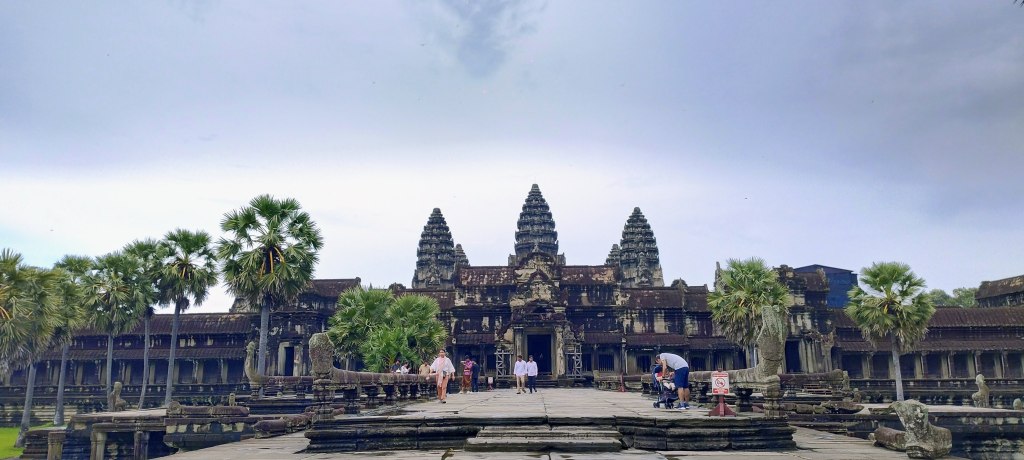
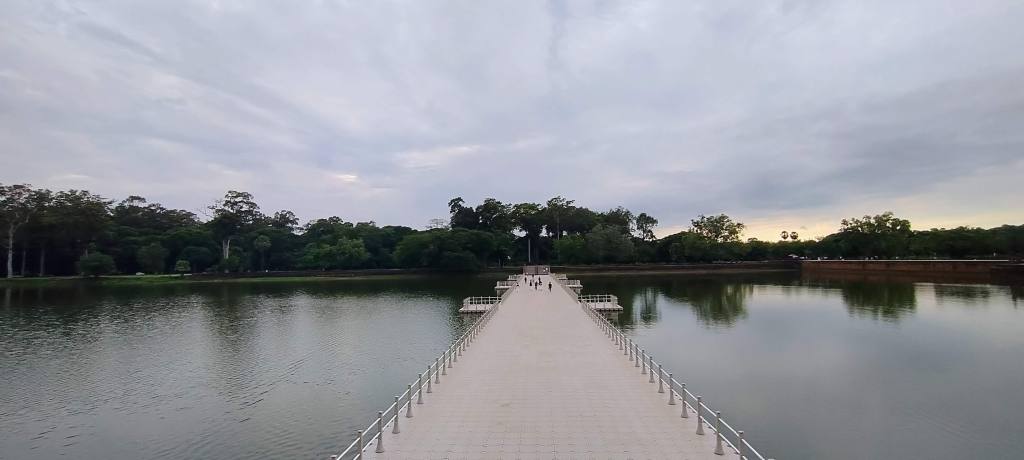
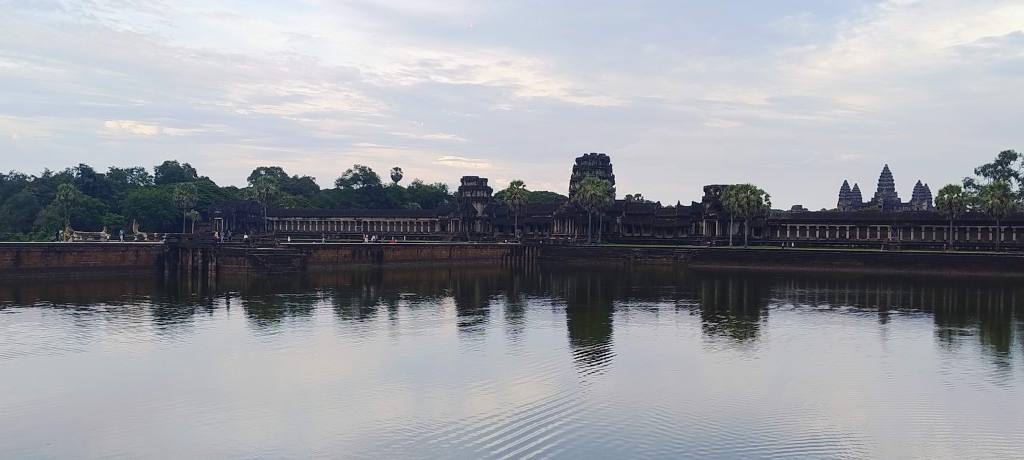
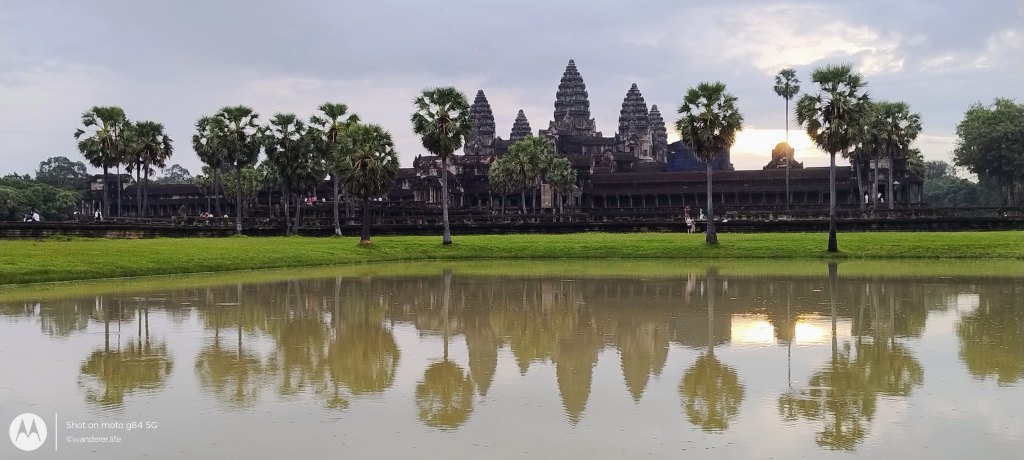
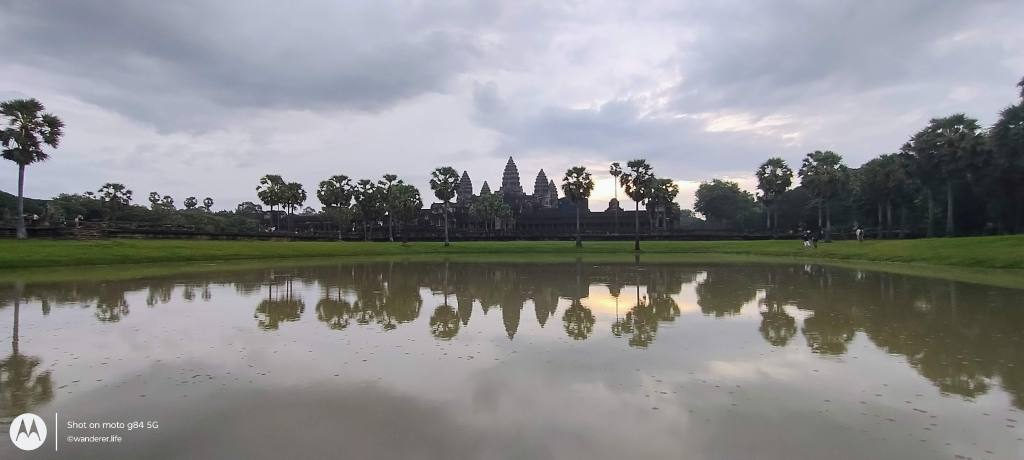
The moment I set my eyes on Angkor Wat, it looked epic and I realised why it is one of the wonders of the world. The iconic three lotus towers are visible from the road. As I was on my mountain bike, I was allowed to drive till the very entrance of the temple. After which I started walking in. At the entry gate which is the starting point of Rainbow bridge, there is a temple structure in front on the central lotus tower and once we cross it, the grandeur and magnificence of the Angkor becomes more and more apparent. The temple is well maintained with lush lawns on both side of the walkway and reflecting ponds on either side. There is a moat encompassing the temple from all four sides.
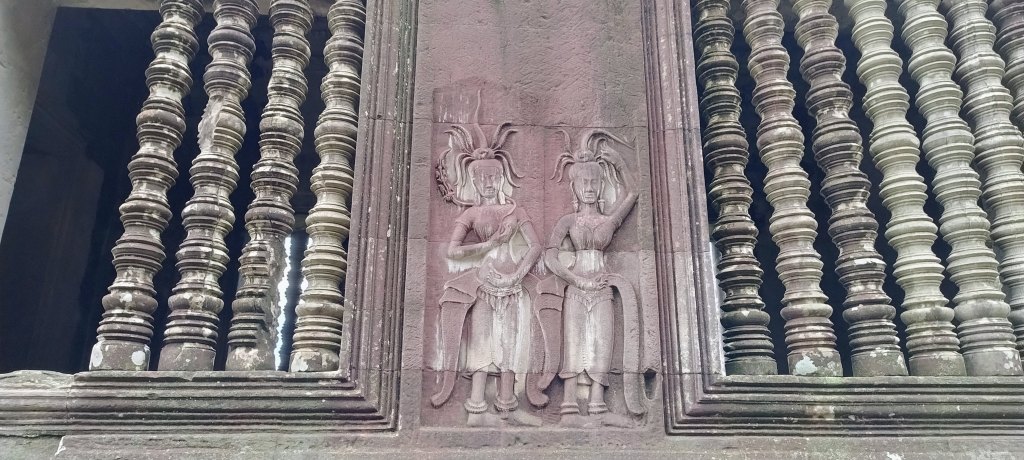
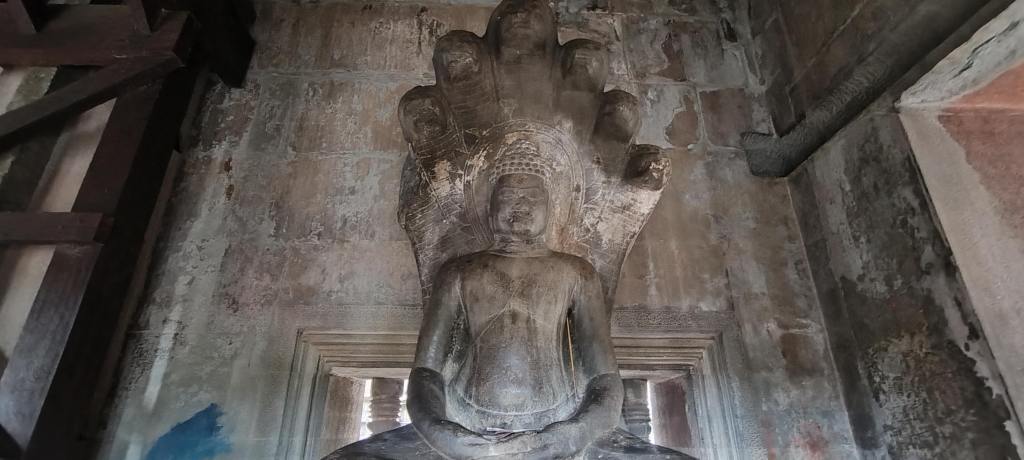
On moving closer, I realised that there are a total of 5 lotus towers, the tallest one at the centre and four equal sized ones at each corner of the square. There is a Buddha statue at the centre of the central lotus tower. On examining closer, the carvings on the stones and the Buddha statues, one can clearly understand the amalgamation of Hinduism and Buddhism in Angkor Wat. As per wiki, it was build as a Hindu Vishnu temple and later transformed into a Buddhist temple.
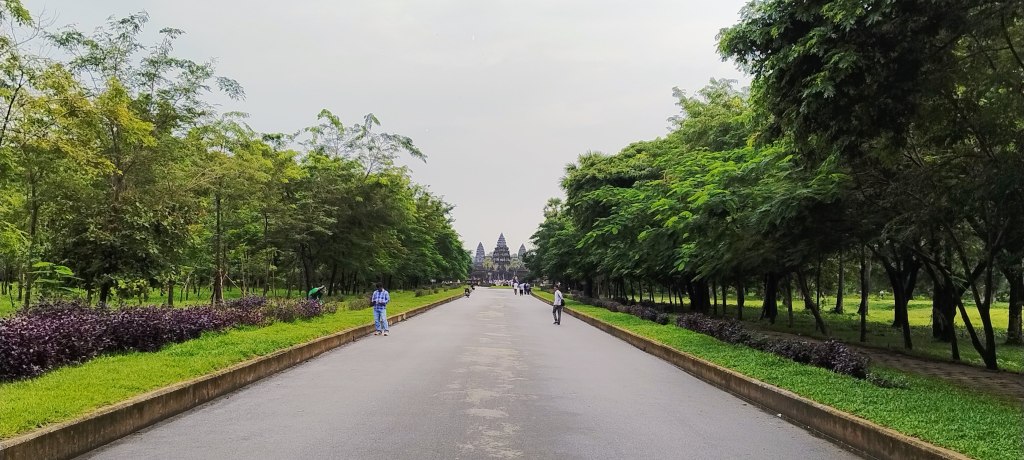
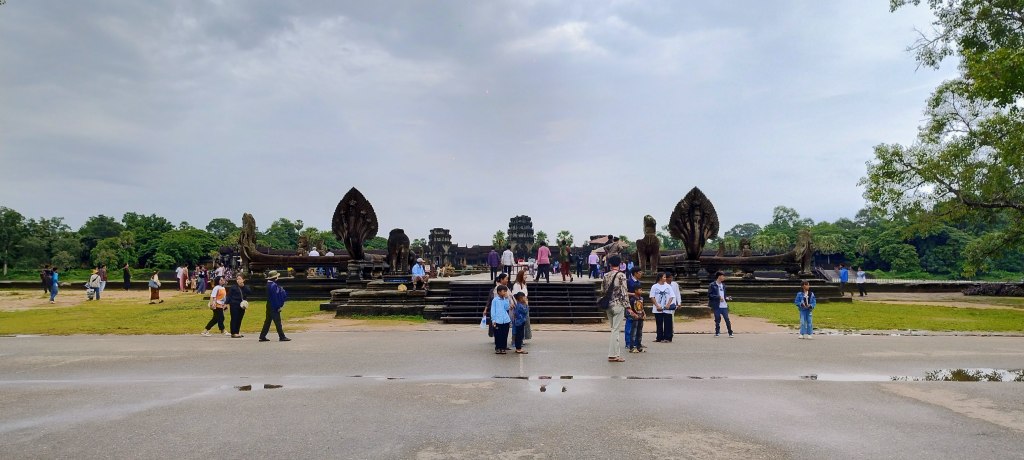


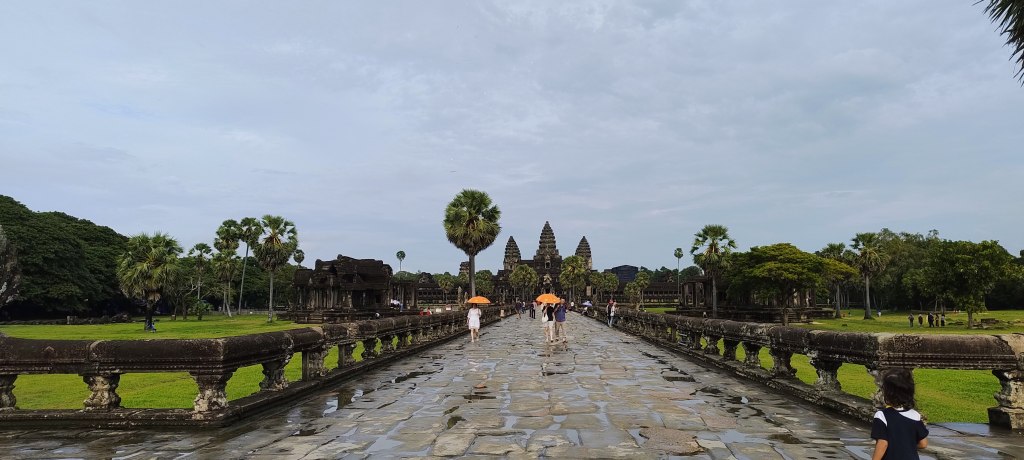





Phnom Bakheng
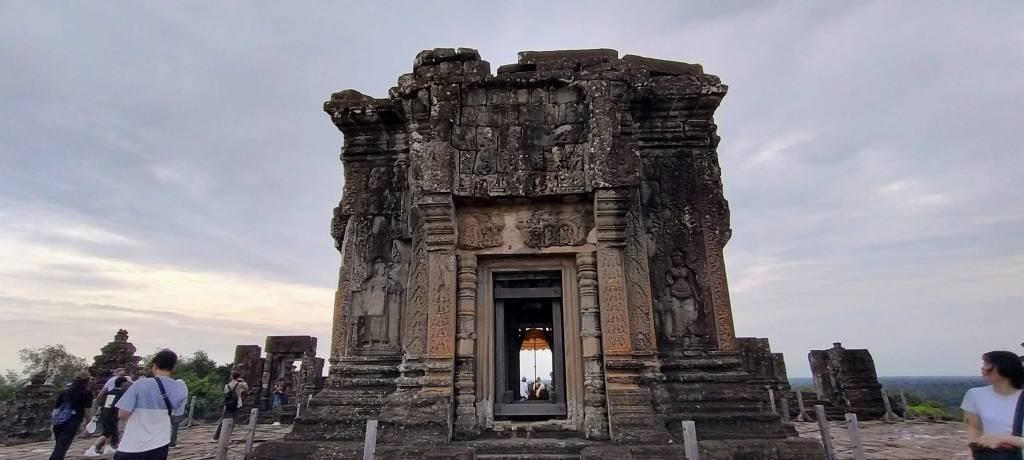
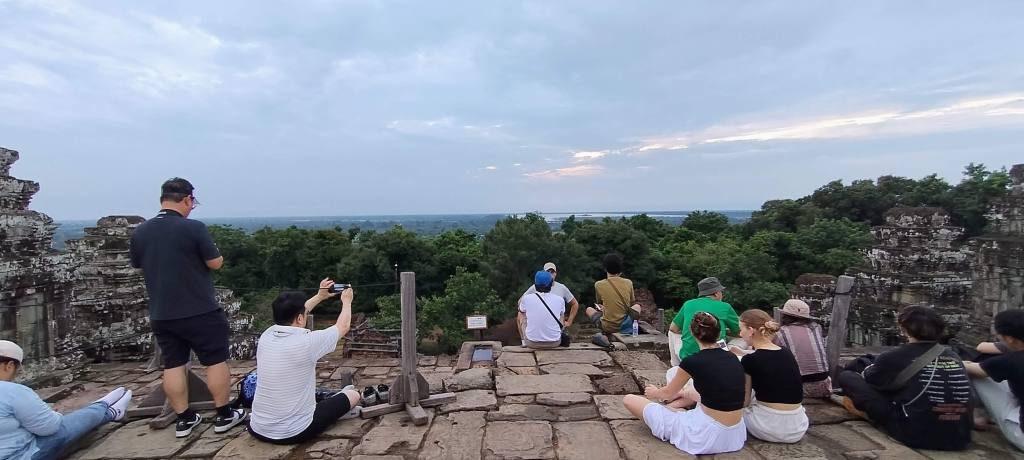
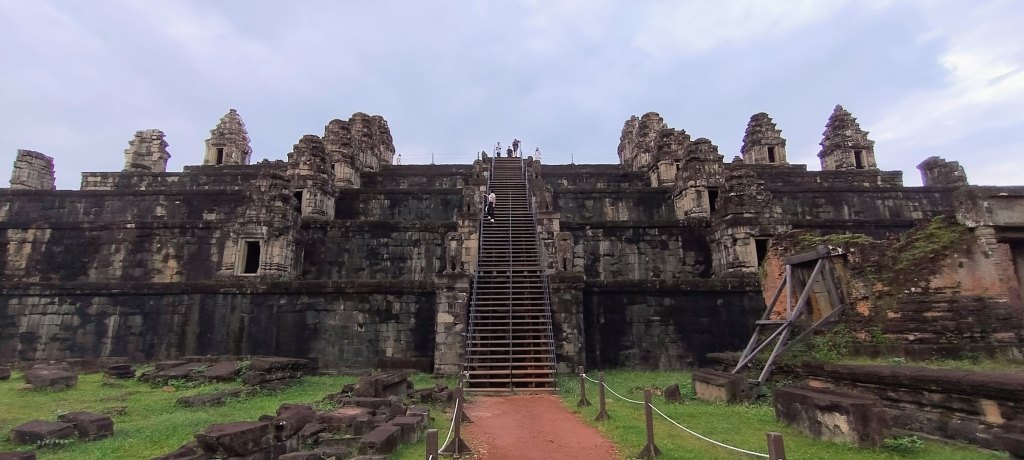
After visiting Angkor, I visited Phnom Bakheng for the sunset. It is located very near the Angkor Wat. It is famous for sunset views. The temple is located on a hill and can be reached by a 15 mins trek from the parking area. The views from the temple top were ordinary for me, however one striking point was that Angkor Wat was clearly visible from this temple top.

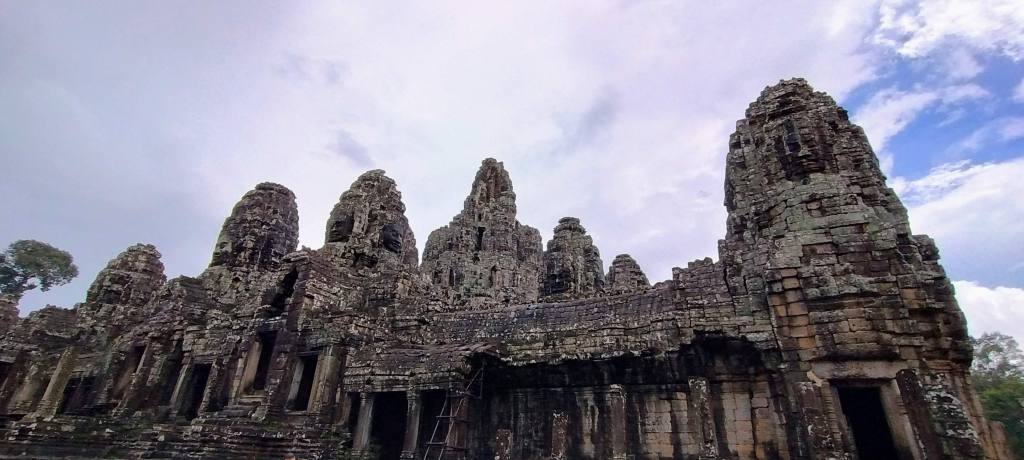
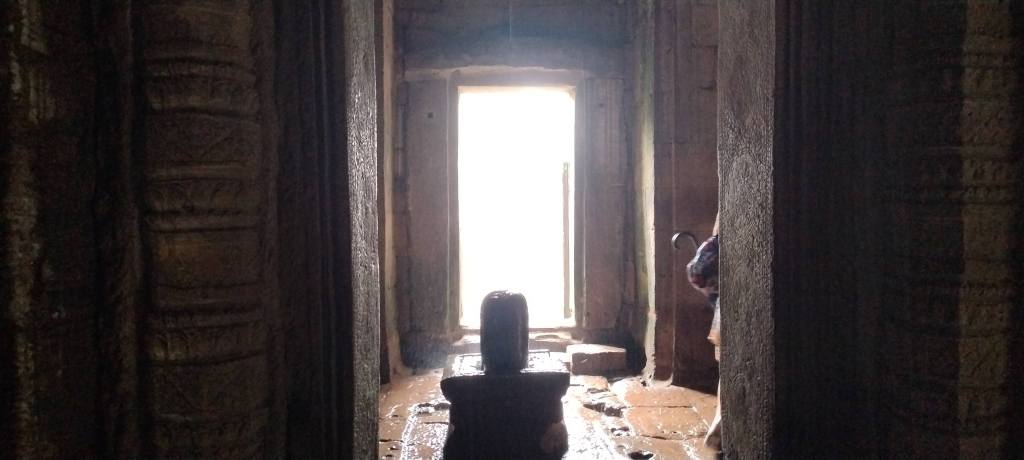
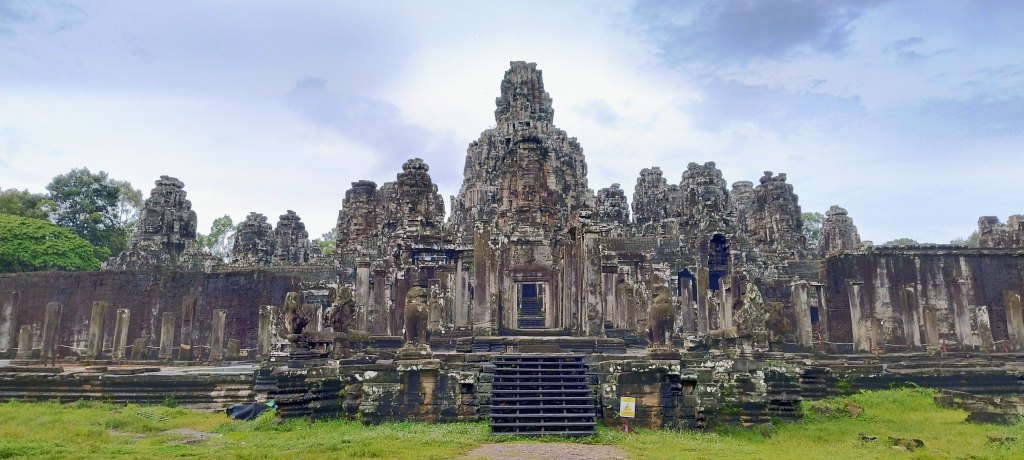
Bayon
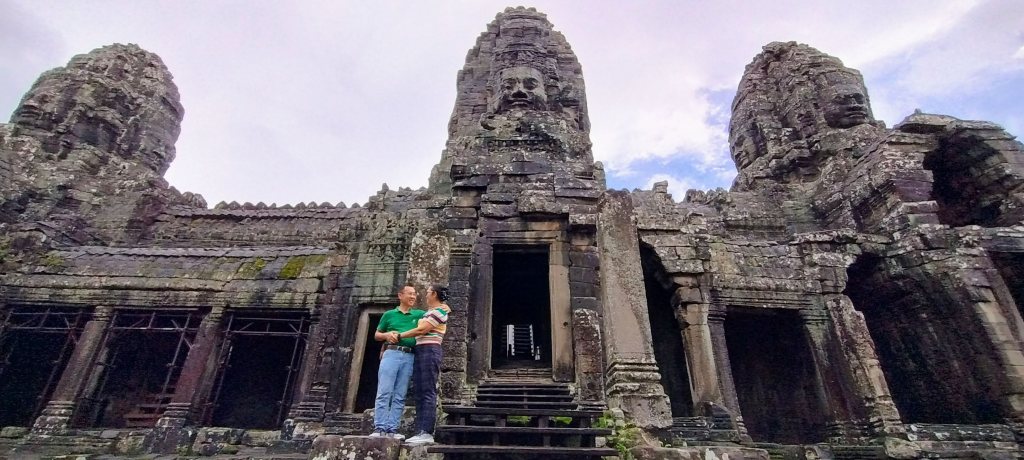
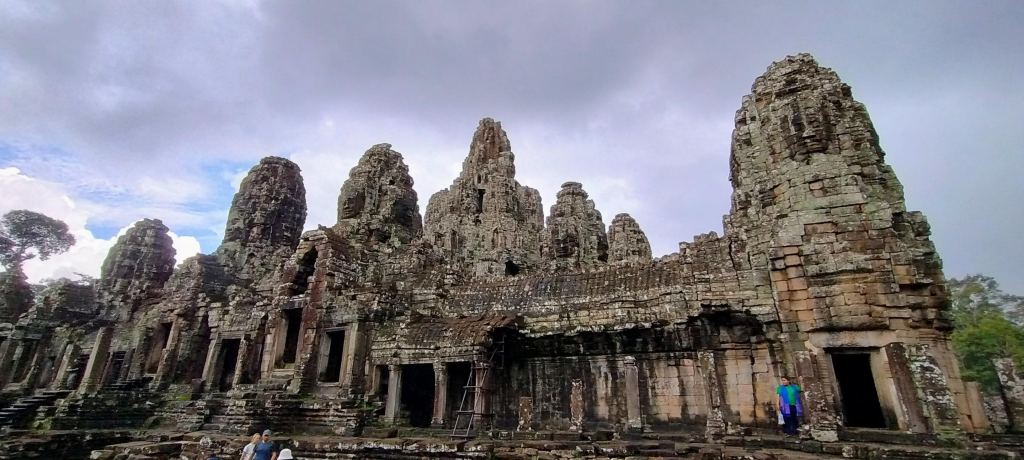
Bayon is known as the temple of smiling faces. It is said that the smiling faces very closely resemble the face of King Jayavarman VII who built this temple in 12th century.


Ta Phrom
This grand temple has been taken over by nature which makes it unique, with huge trees growing out from temple walls at several places. It was built by King Jayavarman VII as a monastery and learning centre dedicated to his mother.
Cycling woes
This was day 2 of my mountain bike ride and little did I know that I would end up riding it for 32kms on this day and half of it in rains. For a person who never cycles, this was I think the maximum limit I could possibly push myself to. I hadn’t realised before – each of these temples are at the distance of a few kms from each other. Angkor to Bayon – 4kms, Bayon to Ta Phrom 5kms, and Ta Phrom to Angkor a whopping 10kms. Counting Lub D to Angkor as 7kms one way, I rode for more than 30kms this day and was dead tired upon my return. To make it even more challenging, it kept drizzling during my complete return trip from Ta Phrom to Lub D. It took me around an hour to cycle till Bayon from Lub D and about 30 mins to Ta Phrom. On return to Lub D, it took me around 90 mins.
Angkor Wat – The sunrise experience
After waiting for a couple of mornings due to rains, the next morning after equinox came and my prayers were finally answered by rain Gods. It was a dry morning, I woke up at 4am, got ready and headed to Angkor on my mountain bike.
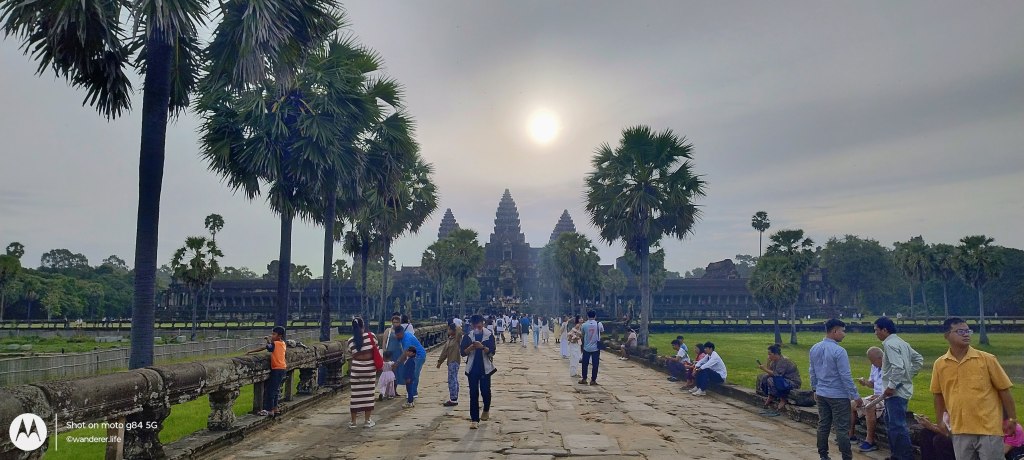
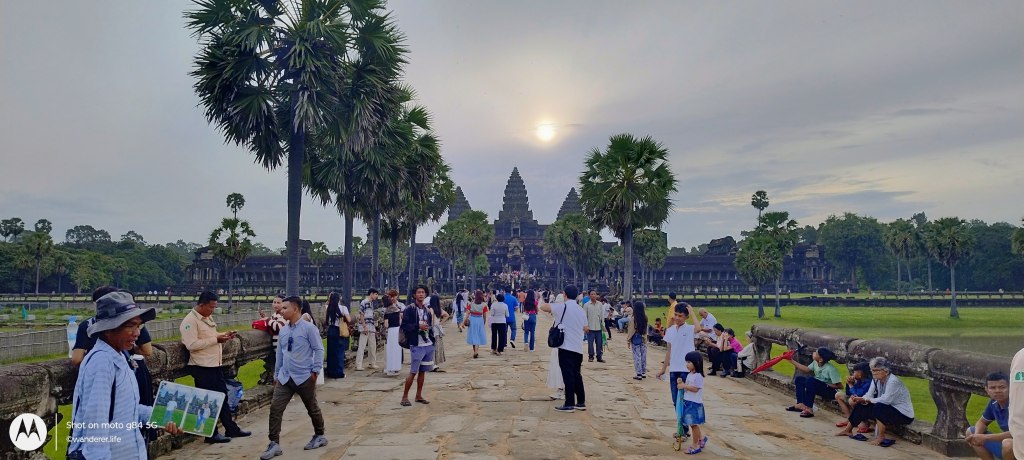
Because of equinox, a large number of visitors had planned to visit Angkor for sunrise. I saw almost everyone (who was out on the road that morning before sunrise) moving towards Angkor. When I reached Angkor with a great sense of anticipation and excitement, I witnessed a sea of human beings entering the temple complex. It was still before dawn and all vantage points for sunrise were packed with visitors. Everyone was searching for their perfect spot to witness the epic equinox sunrise. It seemed as if a grand festival celebration was underway.
When the dawn broke, we realised that the weather was overcast – slight disappointment as clear skies would have made the sunrise behind the central Angkor Tower even more beautiful. However, it was still a sight to behold and we all made memories of the epic Angkor Wat sunrise which will be etched in our memories for a long time to come.


 Tales of a traveller
Leave a comment